.gif)


dyforme
Available for circulation and co-production · info (at) almario (dot) ca
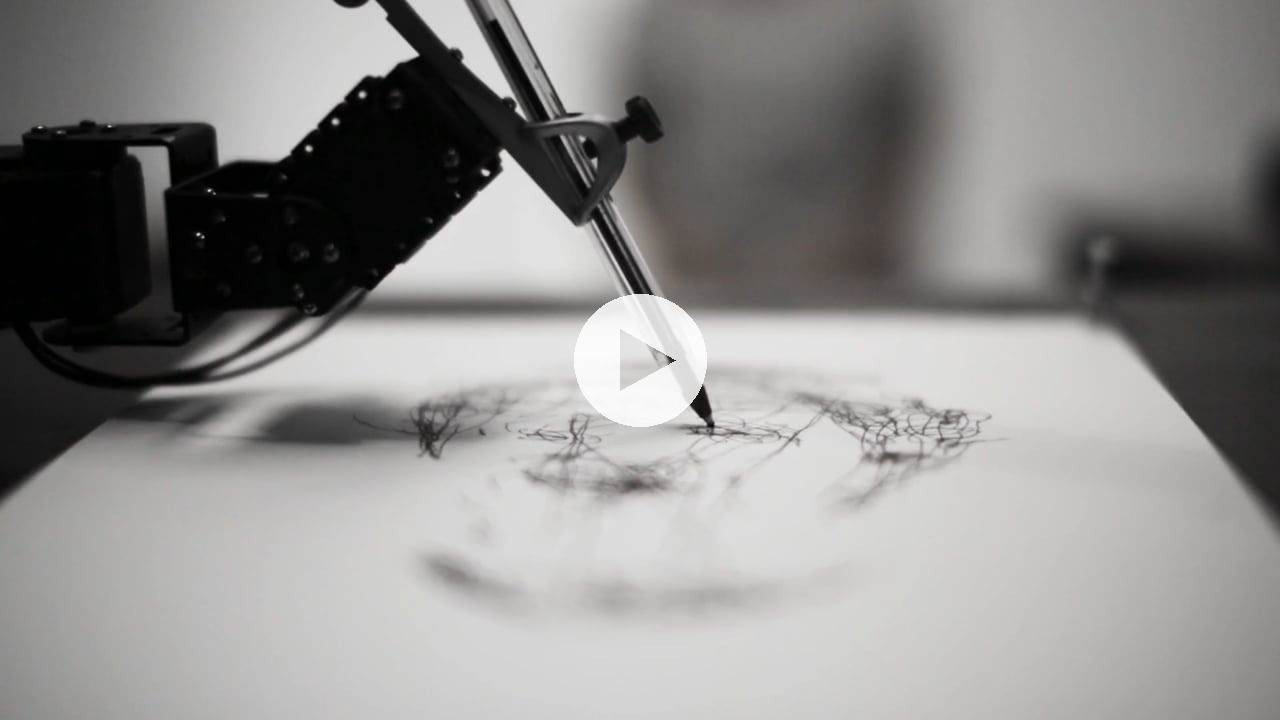
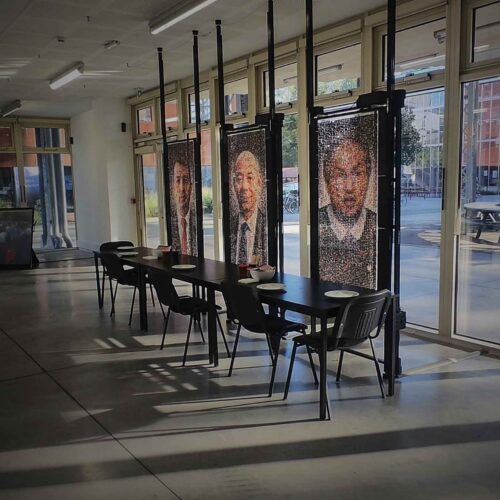
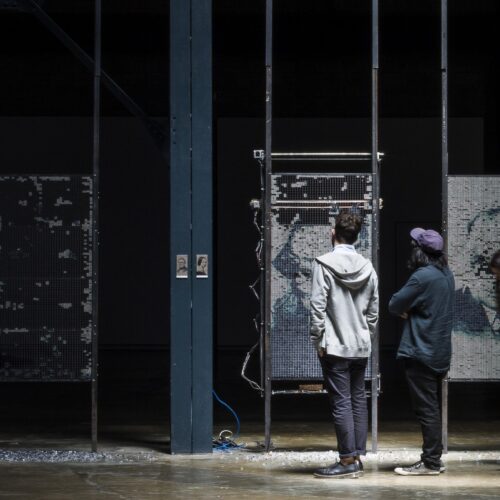
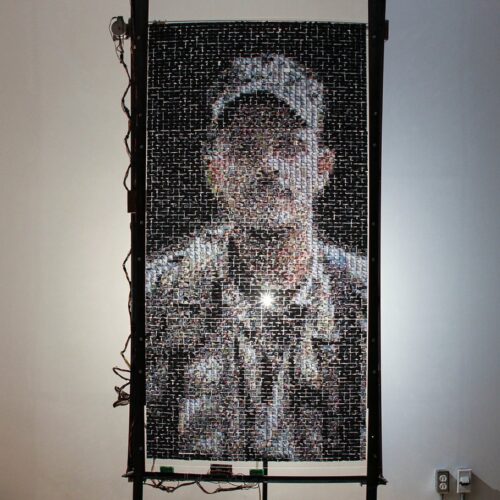
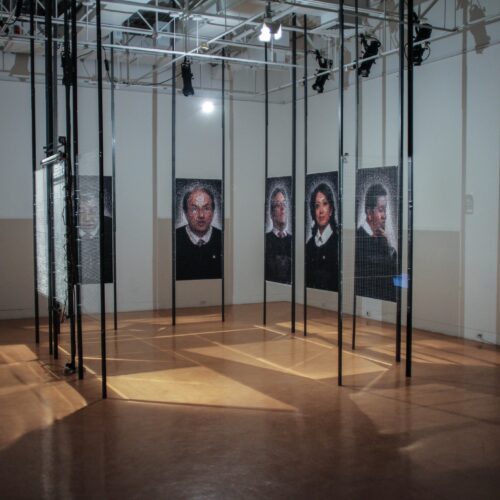
dyforme (2016) is the parallel version of the self-destructive -formé series begun with déformé. It turns the same apparatus toward a different iconography: eight pioneers of computing and artificial intelligence, from Ada Lovelace and Charles Babbage to Grace Hopper, John von Neumann and Elon Musk, whose large-scale portraits are dismantled, one by one, by a machine of the artist's design. The work was commissioned by ACREQ | ELEKTRA and created for the International Digital Art Biennial (BIAN 2016) at Arsenal art contemporain in Montreal, curated by Alain Thibault. Self-destructive by design, its portraits are produced anew for each presentation, in collaboration with the presenting venue.
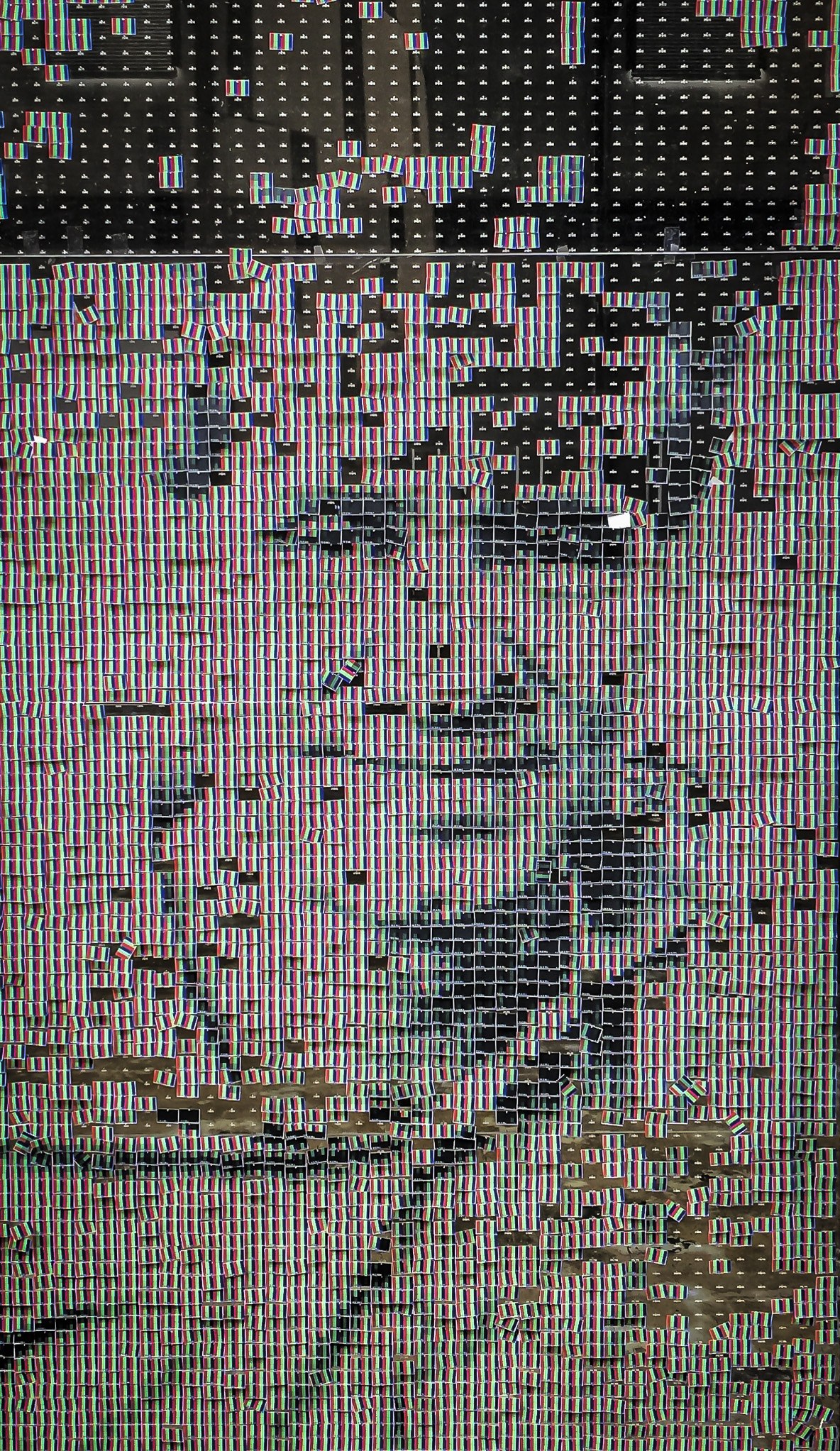
Ada Lovelace, Adele Goldberg, Charles Babbage, Elon Musk, Grace Hopper, John Von Neumann, Norbert Wiener and Ray Kurzweil: three women and five men whose names are not known to everyone, but whose lives and careers have nonetheless been decisive in modern technological history. These nine figures share the fact of having contributed, or of contributing still, to the rise of computing and the advent of the digital age. Whether in mathematics, programming, cybernetics, engineering, quantum mechanics or artificial intelligence, the genius of each of them fostered the immense technological leap that marked the nineteenth and twentieth centuries and continues to shape the twenty-first. Their careers show what human intelligence is capable of. In dyforme, Paolo Almario renders these portraits as large-scale photomosaics (30x60 in), each composed of 4,800 pictorial elements. From afar, the imposing figures of these nine men and women of genius appear; up close, the viewer discovers that each of the 4,800 pictorial elements is made of three coloured lines, red-green-blue, RGB, the computer encoding of colour.
A first reading would suggest that the artist implies these lives and careers survive through the digital encoding they themselves helped develop, the human surviving in their work according to a progressive, teleological technological history whose ultimate outcome would be immediacy and immortality. Yet Paolo Almario's installation breaks with this idealist vision. Each photomosaic portrait is inserted into an automated mechanical device designed by the artist, which dismantles them one by one, piece by piece, leaving on the ground, in small heaps, the symbolic ruins of these existences. Paolo Almario stages the ousting of the human by its creations, and builds here a vertiginous apparatus glimpsing a radical rupture in human History.
dyforme is a self-destructive work, or rather, a work programmed to self-destruct. The work is programmed by the artist himself, whose presence in the installation corresponds precisely to this destructive dimension. Whoever witnesses the process may ask whether the nine women and men whose portraits are dismantled did not also, at the origin, program this self-destruction themselves. If the digital sciences, as they emancipate themselves, absorb our lives and oust our humanity, one of the most compelling and extreme examples being autonomous weapons projects, will this not have been programmed by the human itself? This apparatus also calls into question the idea of a history of progress with immortality, even symbolic, as its final goal. Can our human integrity survive the fragmentation of digital memory? The history of the digital sciences would thus be less that of our memory than that of our erasure, and each of the nine figures presented here will have contributed to their own forgetting and dismantling. Of each of them, there remains only the destructive ghost relentlessly working away at their memory. (Paul Kawczak, 2016)